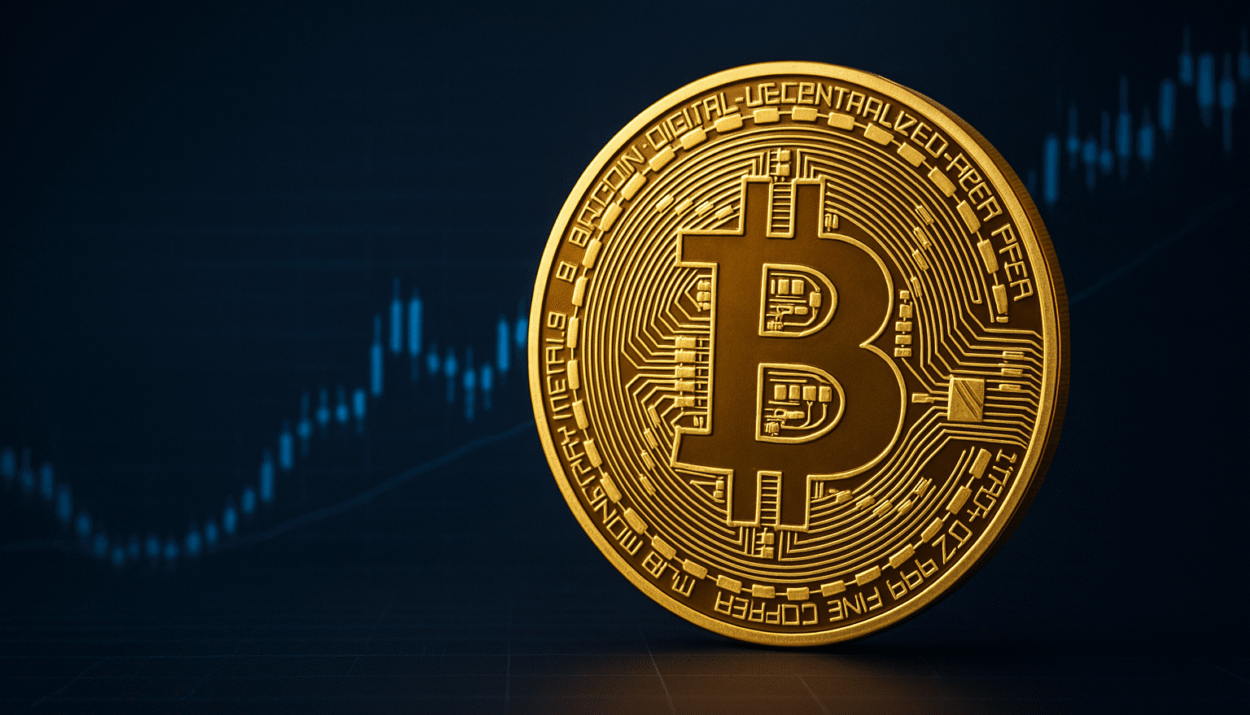
Since its creation in 2009, Bitcoin the pioneering and most widely recognized digital currency has consistently sparked discussions and divided opinions among investors and financial experts.Over the years, it has gone through extreme highs and lows surging to record prices, facing sharp crashes, and repeatedly defying predictions of its demise.
Discover whether Bitcoin is still worth investing in 2025. Learn about its price outlook, pros, cons, risks, and expert predictions all in this complete investment guide.
1. The Current State of Bitcoin in 2025
In 2025, Bitcoin continues to dominate the cryptocurrency market, holding the largest share of total market capitalization. Despite competition from thousands of altcoins and innovations in blockchain technology, Bitcoin remains the most trusted and widely adopted digital asset.
Some key points about Bitcoin in 2025:
- Price Trends: Bitcoin has experienced multiple bull and bear cycles, but its long-term trajectory still leans upward. The 2024 Bitcoin halving reduced block rewards from 6.25 BTC to 3.125 BTC, historically a bullish event due to reduced supply.
- Institutional Involvement: Large financial institutions, hedge funds, and even some governments continue to hold Bitcoin as part of their reserves.
- Global Recognition: Several countries have officially recognized Bitcoin as legal tender or integrated it into their payment systems.
- ETF Approvals: Bitcoin ETFs (Exchange-Traded Funds) have brought more retail and institutional investors into the market, offering regulated access without direct wallet management.
2. Why Bitcoin Still Holds Investment Potential
Bitcoin’s appeal comes from its unique combination of scarcity, decentralization, and global accessibility. Here’s why many investors still consider it a viable investment in 2025:
Scarcity and Limited Supply
Unlike traditional government-issued money, Bitcoin has a fixed maximum supply of just 21 million coins that can ever exist.This fixed supply makes it resistant to inflation caused by excessive money printing. As more people adopt Bitcoin, scarcity can drive prices higher over time.
Store of Value (Digital Gold)
In recent years, Bitcoin has often been likened to digital gold. Gold has served as a reliable store of value for centuries, but Bitcoin brings extra advantages to the table it can be transferred instantly across borders, split into tiny units, and stored with minimal effort. In times of economic uncertainty, many investors turn to Bitcoin as a shield against inflation and the erosion of currency value.Bitcoin as a hedge against inflation and currency devaluation.
Increasing Mainstream Adoption
The use of Bitcoin has expanded far beyond the realm of technology enthusiasts. In 2025, payment processors, e-commerce platforms, and even small businesses accept Bitcoin as payment. Major financial apps have integrated Bitcoin trading, making it accessible to millions of users worldwide.
Decentralization and Security
Bitcoin operates on a decentralized blockchain network secured by thousands of nodes worldwide. This makes it resistant to censorship, fraud, and manipulation by any single authority.
3. Potential Risks of Investing in Bitcoin
While Bitcoin has significant potential, it is not a risk-free investment. Here are some factors to consider:
Price Volatility
Bitcoin remains highly volatile. Price swings of 10%–20% in a single day are still possible. For those engaged in short-term trading, this volatility can serve as both a gateway to profit and a source of potential loss.For long-term investors, volatility can be challenging if they are not prepared for price fluctuations.
Regulatory Challenges
Governments around the world have mixed stances on Bitcoin. Although certain nations welcome it, others enforce heavy restrictions or completely prohibit its use. Any negative regulatory change can impact Bitcoin’s price and adoption.
Technological Risks
Although Bitcoin’s blockchain is highly secure, risks such as wallet hacking, phishing attacks, and loss of private keys remain. Investors must take personal responsibility for securing their assets.
Market Competition
Thousands of cryptocurrencies now exist, with some offering faster transactions, lower fees, and advanced features. While Bitcoin remains dominant, competition from other blockchain projects could limit its growth potential.
4. Bitcoin vs Other Investments in 2025
| Investment | Advantages | Drawbacks |
| Bitcoin | High potential returns, decentralised, limited supply | Volatile, no income, regulatory risk |
| Gold | Stable store of value | Slower growth |
| Stocks | Dividends, linked to company growth | Market dependency |
| Bonds | Lower risk, predictable income | Low returns |
| Real Estate | Tangible, rental income | Illiquid, high entry cost |
5. Strategies for Investing in Bitcoin in 2025
If you’re considering investing in Bitcoin this year, here are some strategies to reduce risk and maximize potential returns:
Dollar-Cost Averaging (DCA)
Instead of investing a large sum at once, spread out your purchases over weeks or months. This helps average out your buying price and reduces the impact of short-term volatility.
Long-Term Holding (HODL)
Bitcoin’s historical data shows that long-term holders have often seen significant returns despite short-term drops. Holding Bitcoin for multiple years could help ride out market turbulence.
Diversification
Avoid putting all your money into Bitcoin. Maintain a diversified portfolio by combining digital currencies, equities, fixed-income securities, and various other asset classes to achieve balance.
Secure Storage
Use hardware wallets or other secure methods to store Bitcoin offline and protect it from hacking attempts.
6. What Experts Say in 2025
Many financial analysts and crypto experts believe Bitcoin still has room to grow in the long term. Factors influencing their optimism include:
- The post-halving effect often leading to higher prices.
- Increased integration of Bitcoin into global financial systems.
- Increasing acknowledgment of Bitcoin’s role as a safeguard against rising inflation.
7. Is Bitcoin the Right Investment for You in 2025?
- High Volatility – Bitcoin can deliver substantial gains but also sharp losses in short timeframes.
- Long-Term Potential – Suitable for investors with patience and a long-term outlook.
- Risk Tolerance – Best for those who can handle market swings without panic selling.
- Portfolio Diversification – Should be part of a broader investment mix, not the only asset.
- Regulatory Awareness – Keep track of changing global laws and policies affecting crypto.
- Affordability Rule – Invest only what you can afford to lose.
- Research Requirement – Stay informed about market trends, technology updates, and risks.
8. conclusions
In 2025, Bitcoin remains a high-risk, high-reward asset. Its fundamentals scarcity, decentralization, and growing adoption make it attractive for investors seeking long-term growth. However, regulatory uncertainty, volatility, and technological risks mean it’s not for everyone.
A smart approach is to invest only what you can afford to lose and to treat Bitcoin as part of a diversified portfolio rather than your sole investment. If history is any guide, Bitcoin has rewarded patient investors, but it demands discipline, research, and a strong stomach for market swings.
Whether Bitcoin will reach new all-time highs or face another deep correction, one thing is certain: it continues to shape the future of finance, and its journey is far from over.
Disclaimer: The investment tips and opinions given here are the personal opinions of experts. These are not the opinions of Riskydollar or its team. Riskydollar advises all readers to consult a certified financial advisor before making any investment.